
Lithium vs Tubular Battery for Hybrid Inverter EMS 2026
When designing a hybrid solar system, the battery you choose is just as important as the panels and the inverter. Today, two battery types dominate the conversation: lithium batteries and tubular (lead acid) batteries. But when you’re using a hybrid inverter with an Energy Management System (EMS) — such as those from Huawei, GoodWe, Growatt, Fox ESS, or Inverex the choice becomes even more critical.
In this detailed guide, we’ll compare lithium vs tubular batteries specifically for hybrid systems with EMS, focusing on compatibility, performance, cost, reliability, and long‑term value in real solar installations.
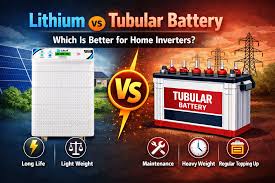
What Is a Hybrid Inverter with EMS?
A hybrid inverter with EMS intelligently manages electricity from three sources:
- Solar panels
- Battery storage
- Grid (WAPDA)
The Energy Management System automatically prioritizes solar power first, battery next, and grid last. It also manages when and how the battery charges and discharges, often using algorithms to maximize savings and battery life.
To get the most out of EMS features — such as time‑of‑use control, peak shaving, load prioritization, and dynamic switching during outages — your battery must support:
- High cycle life
- Deep discharge
- Rapid charging
- Smart communication with the inverter
This is where lithium and tubular batteries diverge significantly.
Core Differences: Lithium vs Tubular
Lifespan & Cycle Life
Lithium Batteries
- Typically 3000–6000+ cycles
- Lifespan around 8–15+ years
Tubular (Lead Acid) Batteries
- Around 500–1200 cycles
- Lifespan around 2–4 years
When paired with a hybrid EMS inverter, batteries may be cycled daily. Over 10 years, a lithium battery may still be in good health, while tubular batteries will likely need replacement multiple times.
Depth of Discharge (DoD)
DoD indicates how much stored energy you can safely use without damaging the battery.
Lithium:
- ~80–100% usable capacity
Tubular:
- ~40–50% usable capacity
This means a 5kWh lithium battery gives nearly 5kWh of usable power, while a 5kWh tubular battery provides only about 2–2.5kWh. EMS features perform best when batteries can sustain deeper discharge without damage.
Charging Speed & EMS Efficiency
Hybrid EMS systems often optimize charging to take advantage of available solar energy, time‑of‑use pricing, or grid conditions.
Lithium:
- Fast charging
- Handles high currents
- Works well with dynamic EMS algorithms
Tubular:
- Slow charging
- Cannot accept high current
- EMS will often leave capacity unused to protect battery
For EMS features like peak shaving and load shifting, lithium’s fast charging/discharging is much more effective.
Smart Communication and Compatibility
Modern hybrid inverters use smart protocols to monitor and optimize battery performance.
Lithium Batteries:
- Support CAN, RS485, or smart BMS communication
- Enable real-time monitoring
- Allow EMS to adapt charging based on conditions
Tubular Batteries:
- No smart communication
- Hybrid EMS can only manage them at a basic level
- Cannot provide real-time battery status
Lithium batteries offer full integration with EMS, allowing the system to make data‑driven decisions. Tubular batteries limit EMS capabilities and prevent advanced optimization.
Real‑World Performance in Hybrid Solar Systems
During Load Shedding
- Lithium batteries deliver stable voltage and support heavy loads, such as air conditioners, refrigerators, and pumps.
- Tubular batteries often experience voltage sag under high load, reducing backup time and stability.
When EMS tries to maintain backup during outages, lithium batteries perform predictably and efficiently, while tubular systems degrade faster.
Efficiency and Energy Utilization
Lithium batteries typically operate at 95–98% efficiency, meaning very little energy is wasted between charge and discharge.
Tubular batteries operate around 70–85% efficiency, contributing to higher energy loss over time.
More efficiency translates to more usable solar power and lower reliance on grid energy — and a hybrid EMS maximizes this benefit.
Long‑Term Cost Comparison
At first glance, tubular batteries can appear cheaper. But a deeper cost analysis reveals a different picture.
Lithium Battery
- Higher upfront cost
- Longer lifespan
- No replacements over many years
- Higher usable capacity
- Better performance = more solar utilization
Tubular Battery
- Lower initial cost
- Requires replacement every few years
- Limited usable capacity
- Higher maintenance costs
- Lower efficiency
Over 10 years, a lithium battery system paired with EMS usually costs less overall than a tubular setup because tubular batteries require frequent replacements and deliver lower energy efficiency.
Compatibility with EMS Features
Hybrid EMS software offers powerful features like:
- Time‑of‑Use scheduling (use battery when grid electricity is expensive)
- Zero export mode
- Peak shaving (reduce grid consumption during high tariff hours)
- Load prioritization (ensure critical loads stay powered)
- Smart charge priorities (solar → battery → grid)
These EMS features work best when the battery supports:
- Deep discharge
- Fast charging
- Accurate state‑of‑charge (SoC) feedback
- High cycle stability
Lithium batteries fulfill all these requirements, while tubular batteries fall short in one or more areas.
Practical Example: 5kW Solar Setup
With Lithium Battery
- 5kWh usable capacity
- Hybrid EMS fully utilized
- Stable power through load shedding
- Inverter can plan charging intelligently
- Longer system performance over time
With Tubular Battery Bank
- Larger physical footprint
- ~2–2.5kWh usable capacity
- EMS limited to basic charging
- Frequent battery replacements
- Reduced reliability under heavy load
Lithium systems deliver far better performance for a household needing consistent power and smart energy management.
Energy Savings and Grid Independence
A key advantage of hybrid EMS is reducing reliance on the grid. Lithium batteries allow deeper utilization of solar energy for longer backup, meaning users draw less electricity from the grid and save more on bills.
Tubular batteries, with limited depth of discharge and lower efficiency, force systems to draw more from the grid, reducing the impact of solar savings.
Maintenance and Practical Considerations
Lithium batteries are maintenance‑free. Their built‑in battery management systems protect against:
- Overcharging
- Overdischarging
- Overheating
- Short circuits
Tubular batteries require periodic maintenance, including checking water levels andセル balancing. This ongoing effort adds time, expense, and system complexity — all avoidable with lithium systems.
Future‑Proofing Your Solar System
As hybrid inverters and EMS software become more sophisticated, battery technology must keep pace. Lithium batteries support software updates, real‑time analytics, and integration with home automation systems.
Tubular batteries do not support advanced data communication, limiting future upgrades and smart features.
If long‑term system performance and future‑proof capacity matter, lithium is the better bet.
Final Verdict
For a hybrid solar system with EMS:
- Lithium batteries offer superior performance, efficiency, lifespan, and smart integration
- Tubular batteries are cheaper upfront but fall short in most key areas
- Over time, lithium systems deliver better value, more energy savings, and higher reliability
Lithium is the clear choice for homeowners who want to maximize the benefits of hybrid inverters with EMS and build a solar system that’s efficient, long‑lasting, and forward‑looking.


Add comment