
Hybrid Inverter Lithium Battery Compatibility – Fox ESS & DJDC Guide in Pakistan
Choosing the right combination of a hybrid inverter and lithium battery is essential for building a reliable solar energy storage system. In Pakistan, homeowners are increasingly moving toward lithium batteries because they offer long service life, efficient charging, and dependable backup during power outages.
However, not every lithium battery works with every hybrid inverter. Battery voltage, communication protocols, charge/discharge limits, and Battery Management System (BMS) communication all need to be compatible.
Two brands that are increasingly considered for solar-plus-storage systems are Fox ESS and DJDC. Both offer hybrid inverter solutions and lithium battery options, but their compatibility depends on the specific inverter and battery model.
What Does Lithium Battery Compatibility Mean?
Lithium battery compatibility means that a hybrid inverter can safely communicate with and operate a particular lithium battery.
A compatible system allows the inverter and battery BMS to exchange important information such as:
- Battery voltage
- State of charge (SOC)
- Charging current
- Discharging current
- Temperature
- Battery protection status
- Maximum charging limits
- Maximum discharge limits
This communication helps the inverter manage the battery safely and efficiently.
For lithium systems, simply matching the battery voltage is not always enough. The inverter and battery should also support compatible communication protocols and configurations.
Why Is Compatibility Important?
Using an incompatible battery can cause:
- Communication errors
- Incorrect battery percentage readings
- Charging problems
- Inverter fault codes
- Reduced battery performance
- Unexpected shutdowns
- Potential safety issues
Before purchasing a lithium battery for your hybrid inverter, always check the manufacturer’s compatibility list and technical documentation for the exact models.
Fox ESS Lithium Battery Compatibility
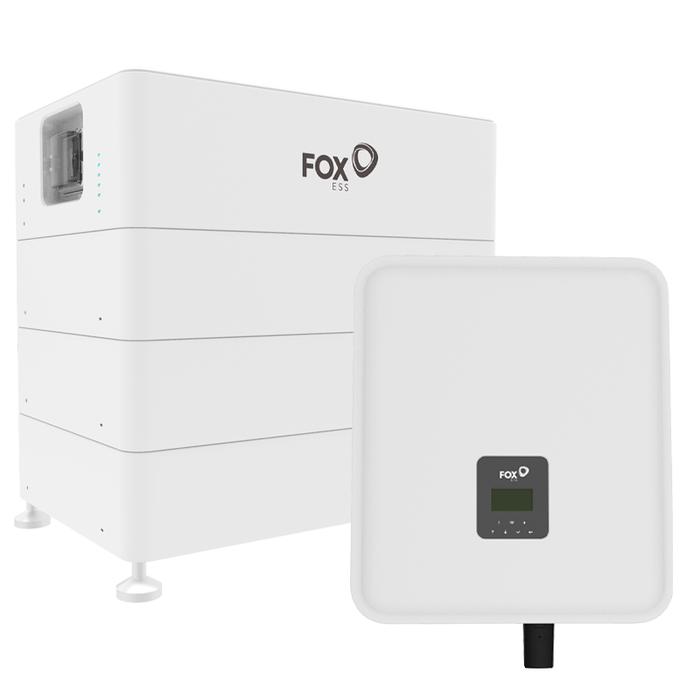
Fox ESS has developed an integrated ecosystem of hybrid inverters and lithium energy-storage batteries. Its product range includes high-voltage battery solutions such as the EP5 and EP11, designed for compatible Fox ESS hybrid inverter systems.
Fox ESS publishes battery compatibility information for its inverter and battery products, making it important to verify the exact model before installation. (fox-ess.com)
Fox ESS Hybrid Inverter + Lithium Battery
Depending on the system, Fox ESS hybrid inverter installations can provide:
- High-voltage lithium storage
- LiFePO₄ battery technology
- Battery management communication
- Smart energy management
- Solar charging
- Grid charging on supported configurations
- Backup power
- Remote monitoring
- Expandable energy storage
Fox ESS EP5 Battery
The Fox ESS EP5 is a high-voltage lithium battery designed for compatible Fox ESS energy-storage systems.
Its modular design allows energy storage capacity to be increased by adding compatible battery modules, depending on the inverter and system configuration.
Fox ESS EP11 Battery
The Fox ESS EP11 is a larger high-voltage energy-storage solution designed for compatible Fox ESS hybrid inverter systems.
It can be useful for customers who require greater energy storage for:
- Large homes
- Villas
- Offices
- High-load backup
- Solar energy storage
Fox ESS compatibility documentation should be checked before connecting an EP-series battery to a particular inverter model.
DJDC Lithium Battery Compatibility
DJDC (Dongjin) is another brand being considered by Pakistani solar customers searching for affordable hybrid inverter and battery-storage solutions.
DJDC hybrid inverter systems can support lithium batteries on compatible models, but battery compatibility should be checked carefully because specifications can vary between inverter generations.
DJDC Lithium Battery Features
Depending on the model, a DJDC hybrid inverter and lithium battery system may provide:
- LiFePO₄ battery compatibility
- Battery charging and discharging
- CAN communication
- RS485 communication
- Battery monitoring
- Solar energy storage
- Backup power
- Grid charging
- Multiple operating modes
The exact communication protocol and battery voltage range should always be confirmed before installation.
Fox ESS vs DJDC Lithium Battery Compatibility
| Feature | Fox ESS | DJDC |
|---|---|---|
| Hybrid Inverter | ✓ | ✓ |
| Lithium Battery Support | ✓ | Supported models |
| LiFePO₄ Support | ✓ | Supported models |
| High-Voltage Battery | ✓ | Model dependent |
| Battery Communication | ✓ | CAN/RS485 on supported models |
| Smart BMS Integration | ✓ | Model dependent |
| Battery Expansion | Supported systems | Model dependent |
| Dedicated Battery Ecosystem | ✓ | Available on selected systems |
| Compatibility Documentation | Available | Model dependent |
The key difference is that Fox ESS has a more integrated inverter-and-battery ecosystem, while DJDC compatibility can depend more heavily on the exact inverter and battery models being paired.
CAN and RS485 Communication
One of the most important considerations when connecting a lithium battery to a hybrid inverter is communication.
CAN Communication
CAN, or Controller Area Network, is commonly used for communication between a lithium battery’s BMS and hybrid inverter.
The battery can communicate information such as:
- SOC
- Voltage
- Current
- Temperature
- Charging limits
- Discharging limits
- Protection status
RS485 Communication
Some systems use RS485 for communication between the inverter and battery.
The communication protocol and pin configuration must match the inverter and battery requirements.
Simply connecting a CAN cable does not guarantee compatibility. The inverter may also need the correct battery protocol or communication setting.
Fox ESS or DJDC – Which Is Better for Lithium Batteries?
Fox ESS
Fox ESS can be a strong choice if you want:
- A dedicated inverter-and-battery ecosystem
- High-voltage lithium storage
- Smart energy management
- Advanced monitoring
- Expandable battery capacity
- Premium energy-storage technology
Its EP battery range is particularly relevant for customers building a high-voltage solar storage system.
DJDC
DJDC can be suitable if you are looking for:
- A more budget-conscious hybrid system
- Lithium battery compatibility on supported models
- Residential backup
- Solar energy storage
- Practical hybrid functionality
The exact inverter and battery combination should be verified before purchase.
How to Check Lithium Battery Compatibility
Before buying a battery for a Fox ESS or DJDC hybrid inverter, check these specifications:
1. Battery Voltage
Check whether the inverter requires a low-voltage or high-voltage battery.
2. Battery Chemistry
Confirm whether the inverter supports the battery’s chemistry, such as LiFePO₄.
3. Communication Protocol
Check whether the inverter and battery support the same communication protocol, such as CAN or RS485.
4. Maximum Charging Current
The battery must support the charging current required by the inverter.
5. Maximum Discharge Current
Check whether the battery can safely provide the inverter’s required output current.
6. BMS Compatibility
The inverter should be able to communicate properly with the battery’s BMS.
7. Manufacturer Compatibility List
This is one of the most important checks. Always verify the exact inverter and battery model combination using the manufacturer’s compatibility documentation.
Lithium Battery Compatibility for 5kW Hybrid Inverters
A 5kW hybrid inverter with a lithium battery is a popular configuration for residential solar systems.
A properly matched system can provide backup for:
- Fans
- Lights
- Refrigerator
- Television
- Wi-Fi router
- Computers
- Small appliances
The required battery capacity depends on the load and desired backup time.
For example, a 5kWh battery could theoretically provide approximately 5 hours at a constant 1kW load, but actual usable runtime will be lower or higher depending on battery usable capacity, inverter efficiency, and the changing load.
Common Lithium Battery Compatibility Problems
Some common issues include:
Inverter shows 0% battery:
The communication protocol may not be configured correctly.
Battery does not charge:
Check battery voltage, charging limits, BMS communication, and inverter settings.
Battery fault appears:
The battery BMS may be reporting a protection event.
SOC is inaccurate:
The inverter and BMS may not be communicating correctly.
Inverter shuts down during high loads:
Check battery discharge current and inverter output requirements.
These problems highlight why compatibility should be checked before installation rather than after purchasing the equipment.
Final Verdict
When choosing a hybrid inverter lithium battery compatibility solution in Pakistan, both Fox ESS and DJDC can be considered, but the exact model combination matters.
Fox ESS is particularly attractive for users who want a dedicated high-voltage lithium energy-storage ecosystem, including compatible EP-series batteries, advanced monitoring, and integrated energy management.
DJDC can be a practical choice for customers seeking a more affordable hybrid solar system with lithium battery support on compatible models.
Whether you choose Fox ESS or DJDC, don’t select a battery based solely on its kWh capacity or voltage. Always verify BMS communication, CAN/RS485 protocol, charging current, discharge current, battery voltage, and the manufacturer’s compatibility list.
A properly matched inverter and lithium battery will provide better performance, safer operation, and more reliable backup for your solar system.


Add comment