
Solar vs Hybrid Inverter Comparison Which One Should You Choose?
Many homeowners in Pakistan are considering solar power to save on bills and cope with frequent load shedding. But once you start exploring, two inverter types often come up:
Solar Inverters
Hybrid Inverters
Both work with solar panels, but they serve different purposes and deliver different results especially when you care about backup power, battery integration, and long-term savings.
This comparison breaks down the key differences so you can choose the right solution for your home.
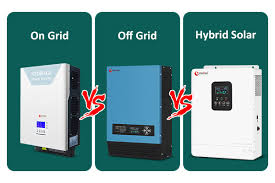
What Is a Solar Inverter?
A solar inverter (sometimes called an on-grid solar inverter) converts the direct current (DC) produced by solar panels into alternating current (AC) used by your home appliances.
Key points:
- Works when solar panels produce energy (daytime)
- Sends solar power to home loads first
- Excess power can go to the grid (net metering)
- Usually does not handle battery backup
Best for:
Homes that want to save on electricity bills through net metering and daytime solar use, with minimal focus on backup power.
What Is a Hybrid Inverter?
A hybrid inverter combines solar power, grid power, and battery storage in one unified system.
Key points:
- Uses solar power first (when available)
- Charges batteries using solar or grid
- Supplies power from batteries during load shedding or at night
- Seamlessly switches between solar, battery, and grid
Best for:
Homes that want solar savings + dependable backup power — especially in areas with frequent outages.
Side-by-Side Comparison
| Feature | Solar Inverter | Hybrid Inverter |
|---|---|---|
| Solar panel support | Yes | Yes |
| Battery integration | Often no | Yes (built-in logic) |
| Works during load shedding | No (unless battery add-on) | Yes |
| Keeps home running at night | No (requires battery) | Yes |
| Net metering support | Yes | Yes |
| Grid usage | Yes | Yes |
| Cost | Lower upfront | Higher upfront |
| Complexity | Simple | More advanced |
| Best for | Bill saving | Backup + bill saving |
Solar Production & Efficiency
Solar Inverter
✔ Converts solar DC to clean AC
✔ Good for maximizing solar use during daytime
✘ Cannot use solar energy for backup unless a battery system is added
Hybrid Inverter
✔ Converts solar DC to AC
✔ Stores excess solar in batteries
✔ Provides backup using battery + solar during outages
Winner for total solar utilization: Hybrid inverter
Backup Power & Load Shedding
In Pakistan, load shedding often lasts several hours — making backup power a top priority.
Solar Inverter:
➤ Provides power only when the sun is shining
➤ Stops working when the grid fails (for safety), unless paired with a separate battery system
Hybrid Inverter:
➤ Provides backup using solar + battery
➤ Works day and night
➤ Automatically switches during outages
Winner for uninterrupted power: Hybrid inverter
Battery Usage & Energy Storage
Solar Inverter:
May require a separate battery controller
Often not designed to manage batteries efficiently
Hybrid Inverter:
Built-in battery charging/discharging logic
Works with lithium, tubular, AGM/VRLA
Protects battery life and prolongs performance
Winner for battery handling: Hybrid inverter
Cost Comparison
Solar Inverter:
✔ Lower upfront setup
✔ Good for basic solar integration
✘ Needs additional components (charger, controller) for backup
Hybrid Inverter:
✔ Higher upfront cost
✔ All-in-one solution (solar + battery + grid)
✔ No need for separate controllers
Cost Over Time:
While solar inverters are cheaper initially, hybrid systems often save more money over time due to better solar usage, reduced grid dependency, and backup capability.
Winner for long-term value: Hybrid inverter
Ease of Installation and Use
Solar Inverter
• Simpler setup
• Fewer components
• Ideal for basic solar systems
Hybrid Inverter
• Slightly more complex install
• Requires battery sizing and system design
• Better monitoring and energy management
Both are installable with professional help — but hybrid systems offer smart energy routing that’s easier to manage after installation.
Winner for simplicity: Solar inverter
Winner for intelligent performance: Hybrid inverter
Best Use Cases (Pakistan)
Choose Solar Inverter If:
✔ You want to reduce electricity bills
✔ Grid power is mostly available
✔ Load shedding is occasional or short
✔ You don’t need backup power
✔ You want the lowest upfront cost


Add comment